
Key takeaways:
Poor hip mobility can contribute to low back pain because the lumbar spine often compensates for mobility that the hips are missing
Your hip performs six main movements: Flexion, extension, abduction, adduction, internal rotation, and external rotation
Hip internal rotation and hip dissociation are two areas to focus on improving if you are dealing with lower back pain
Poor hip mobility is one of the most overlooked contributors to low back pain. Your body is designed to move in three dimensions; to bend, rotate, extend, lunge, squat, and more. When your hips can’t do their share of that work, one body part that often takes the brunt of the compensation is your lumbar spine, your low back. Keep reading to learn what movements your hips actually perform, how poor hip mobility leads to lower back pain, how you can test yours, and how to start improving it.
What Movements Does the Hip Perform?
The hip is a ball-and-socket joint that moves in six main directions: flexion, extension, abduction, adduction, internal rotation, and external rotation. Healthy hips can move through all of them, which keeps your low back from having to cover for missing motion.
Movements of the hips:
Flexion: Bringing your knee to your chest
Extension: Moving your leg behind you
Abduction: Moving your leg out to the side
Adduction: Swinging your leg across the middle of your body
Internal rotation: Rotating your hip so your knee and toes are pointed toward the middle of your body
External rotation: Rotating your hip so your knee and toes are pointed away from the middle of your body
Okay, there is a seventh. Because your hip is a ball-and-socket joint, it can combine these movements into something called circumduction, which allows you to rotate your hip in a circle.
How Does Poor Hip Mobility Cause Low Back Pain?
Poor hip mobility can lead to low back pain because stiff or restricted hips force the lumbar spine to make up the missing motion. Every time you bend, squat, rotate, or walk, your hips and low back share the workload. When the hips can’t do their part, the spine compensates, and repeated stress on the lower back can lead to tightness, irritation, and pain.
Now, movement of the lumbar spine by itself is not a bad thing. Having access to and control of movement in different positions is important for spinal health. But when the spine becomes the main driver of movement that the hips should be doing, you are eventually going to run into problems.
Think about finishing at the top of a deadlift. If the front of your hips is shortened because you sit at a desk or spend lots of time commuting in the car, you may not have access to full hip extension. But you still need to stand up straight to finish the lift, correct? If you can’t reach full hip extension, your back will arch to stand you “upright” rather than firing your hips forward to finish the movement. One or two reps are unlikely to make a difference, but when compounded over time, your back may start hurting.
Does Sitting Cause Tight Hips and Low Back Pain?
Sitting for long periods can contribute to tight hips and low back discomfort. Hours spent with your hips bent can leave the front of your hips feeling short and stiff, which may make it harder to extend your hips fully when you stand, walk, or lift. For some people, this shows up as an anterior pelvic tilt, where the pelvis tips forward and the low back arches more to keep you upright. Everyone has a natural curve in their spine called lumbar lordosis, and posture alone doesn’t predict pain. But an excessive curve combined with limited hip extension is a pattern we commonly see in people with lower back pain.
What Does Poor Hip Mobility Look Like?
Limited hip mobility often shows up in everyday ways:
You feel back tightness after sitting for long periods
Squats and deadlifts feel stiff or pinchy in the back
Rotational movements like golf feel stiff in the low back
One hip feels noticeably tighter than the other
You constantly feel like you need to bend forward to stretch your low back
What is Hip Dissociation?
Hip dissociation is the ability to move your thigh bones independently of your pelvis and spine. It lets you hinge, squat, and rotate using your hips instead of your lower back. When it’s limited, your back often takes over for your hips. Improving it is one of the best ways to protect your low back. It also translates to better daily movement, stronger lifts in the gym such as squats, deadlifts, and kettlebell swings, improved athletic performance, and, for many people, less daily pain. Here is a simple test to check yours.
Hip Mobility Test: The Rock-Back Test
What you'll need: a bit of floor space, and optionally a phone to film yourself from the side. Better yet, find a gym buddy to do this with.
How to do it:
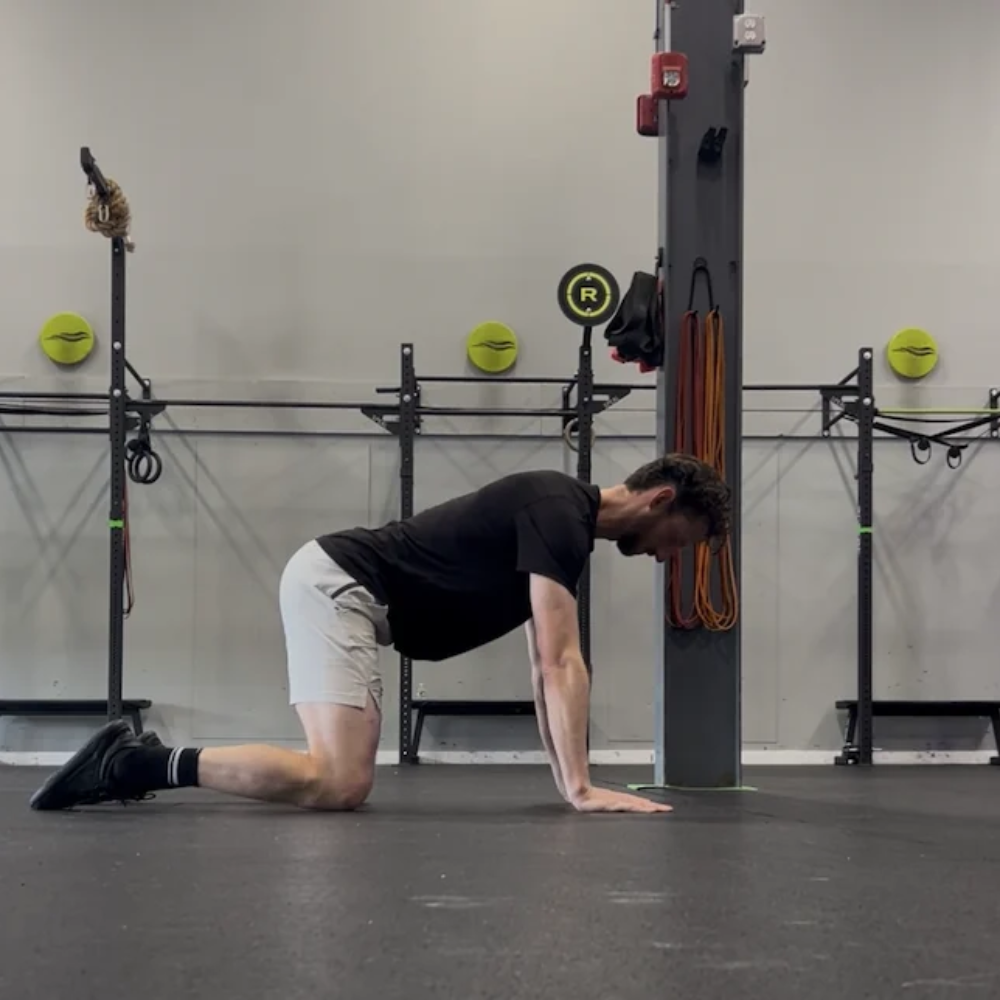
Get on all fours. Place your hands under your shoulders and your knees under your hips, about hip-width apart.
Set your spine. Keep your back in a neutral position, not sagging and not rounded. Think of a long, flat line from your head to your tailbone.
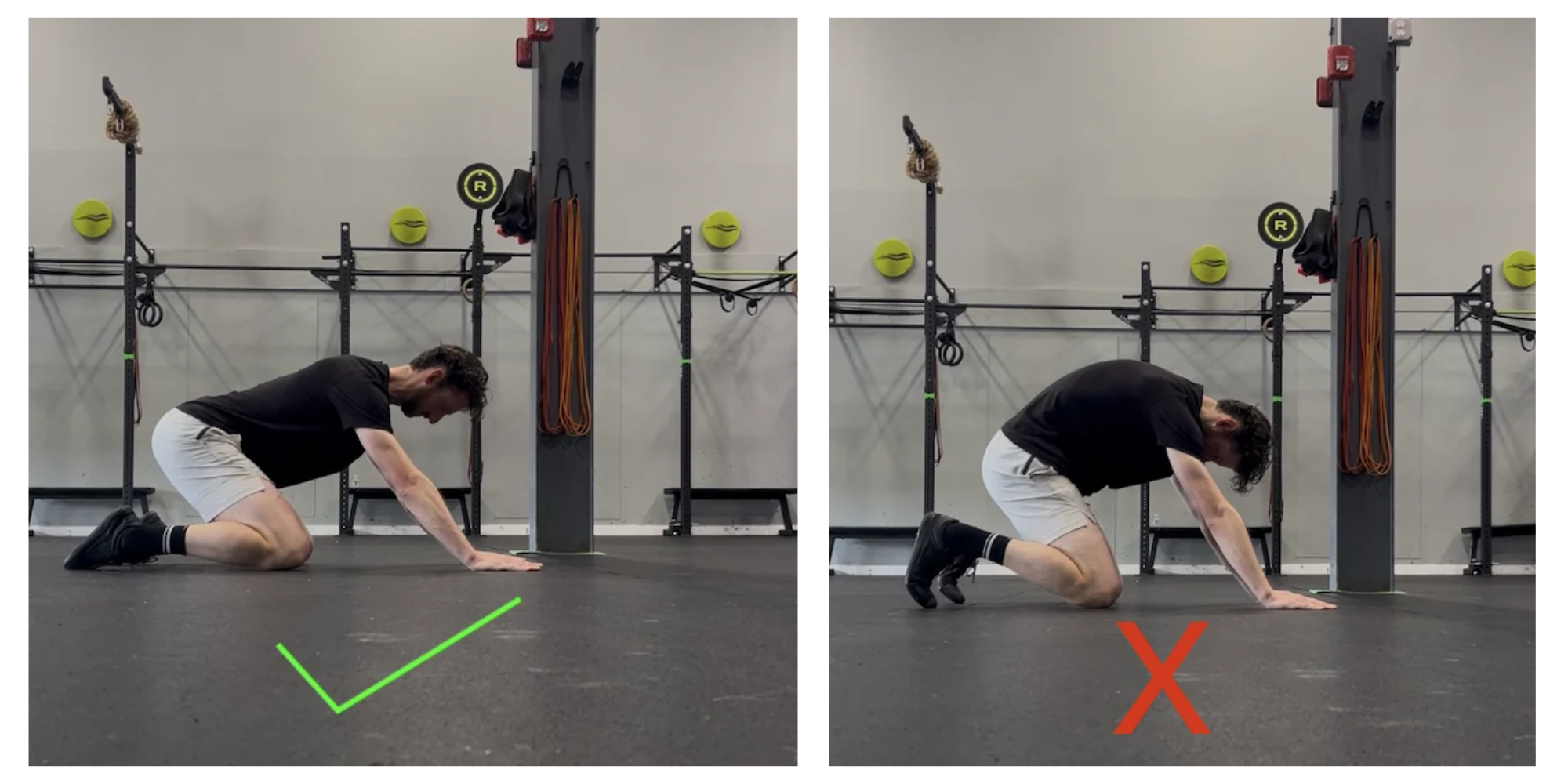
Rock your hips back toward your heels. Move slowly, and keep your spine as still as possible. Your hips should do all the moving.
Go as far as you can without your back changing shape. The moment your lower back starts to round or your pelvis tucks under, stop and note how far you got.
Here is the starting position:
Here are the correct and incorrect end positions:
Safety note: This test should feel like effort or a stretch, never sharp pain. If you feel pinching, radiating symptoms, or pain in your back, stop and check in with your physical therapist or healthcare provider.
What to look for:
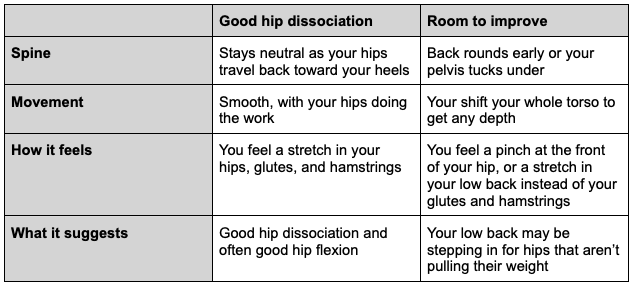
Hip Mobility Exercises for Low Back Pain
Two of the most useful exercises for hip mobility and low back pain are the split stance hip hinge against a foam roller and windshield wipers. Both target hip internal rotation, an often missing piece in people with low back pain. Internal rotation matters because walking, squatting, cutting, and swinging a golf club or bat all call on your hips to rotate. When the hip can’t rotate well, that rotation often has to come from somewhere else, and that somewhere is frequently the low back.
1. Split stance hip hinge against a foam roller
Set up next to a wall in a split stance with a foam roller pinned between your outside leg and the wall
While actively pushing your knee into the foam roller, push your hips back and hinge over the front leg
Feel the glutes on the front hip activate. Stop before your low back starts to round
Try 2 sets of 8 to 10 reps per side
2. Windshield wipers (2:49 mark)
Sit on the ground with your knees bent and your feet wider than your hips
Slowly let one knee fall inwards, raise it back up, and then repeat on the other side, like a windshield wiper
Keep your torso still and move only from the hips
Try 2 sets of 10 to 12 reps per side
Are you currently dealing with low back pain, or want some help learning to move better?
Schedule an appointment with Jake, a Licensed Massage Therapist and Certified Personal Trainer, at Ridgeline Physical Therapy in North Hampton, New Hampshire, today.
Frequently Asked Questions
Can tight hips cause lower back pain?
Yes, tight hips can contribute to lower back pain. When your hips lack the range of motion to bend, rotate, squat, hinge, or lunge, your lumbar spine often has to make up for the missing motion. Over time, that extra stress on the low back can lead to tightness, irritation, and painHow do I know if my hips are causing my back pain?
Lower back pain usually has more than one cause, but there are clues. If one hip feels tighter than the other, you have to round your back to pick something up off the ground, or you have an excessive anterior pelvic tilt, there is a good chance your hips are contributing. A hands-on assessment from a physical therapist or massage therapist can help confirm it.How can I improve my hip mobility to help with lower back pain?
Focus on hip internal rotation and hip dissociation. The split stance hip hinge against a foam roller and windshield wipers target internal rotation, while the rock-back test shows how well your hips move independently of your spine. Practice a few times per week and stay within a comfortable range
Disclaimer: The information provided on this blog is for general informational and educational purposes only. The content is not intended to be a substitute for professional medical advice, diagnosis, or treatment. Always seek the advice of your physician or other qualified health provider with any questions you may have regarding a medical condition.Never disregard professional medical advice or delay in seeking it because of something you have read on this blog. If you think you may have a medical emergency, call your doctor or 911 immediately.