
Progress In the Gym Isn’t Just About Lifting More Weight
It can be easy to think about progress in the gym as a simple upward trajectory. Something that has linear progress.
Last week you lifted 20 pounds. This week you lifted 25. Next week perhaps you will lift 30. If you keep going long enough, perhaps the numbers will keep progressing. And sometimes, this can certainly be the case for a while.
Except bodies don't generally work in a linear fashion. There are many other variables to account for.
Strength doesn't progress in a perfectly linear line and the amount of weight on the bar or dumbbell being used is only one piece of a much bigger picture. It's only one variable.
Some weeks you will add weight. Some weeks you will use the same weight. And sometimes, using less weight is exactly what makes sense. None of these choices are inherently good or bad. They are simply information.
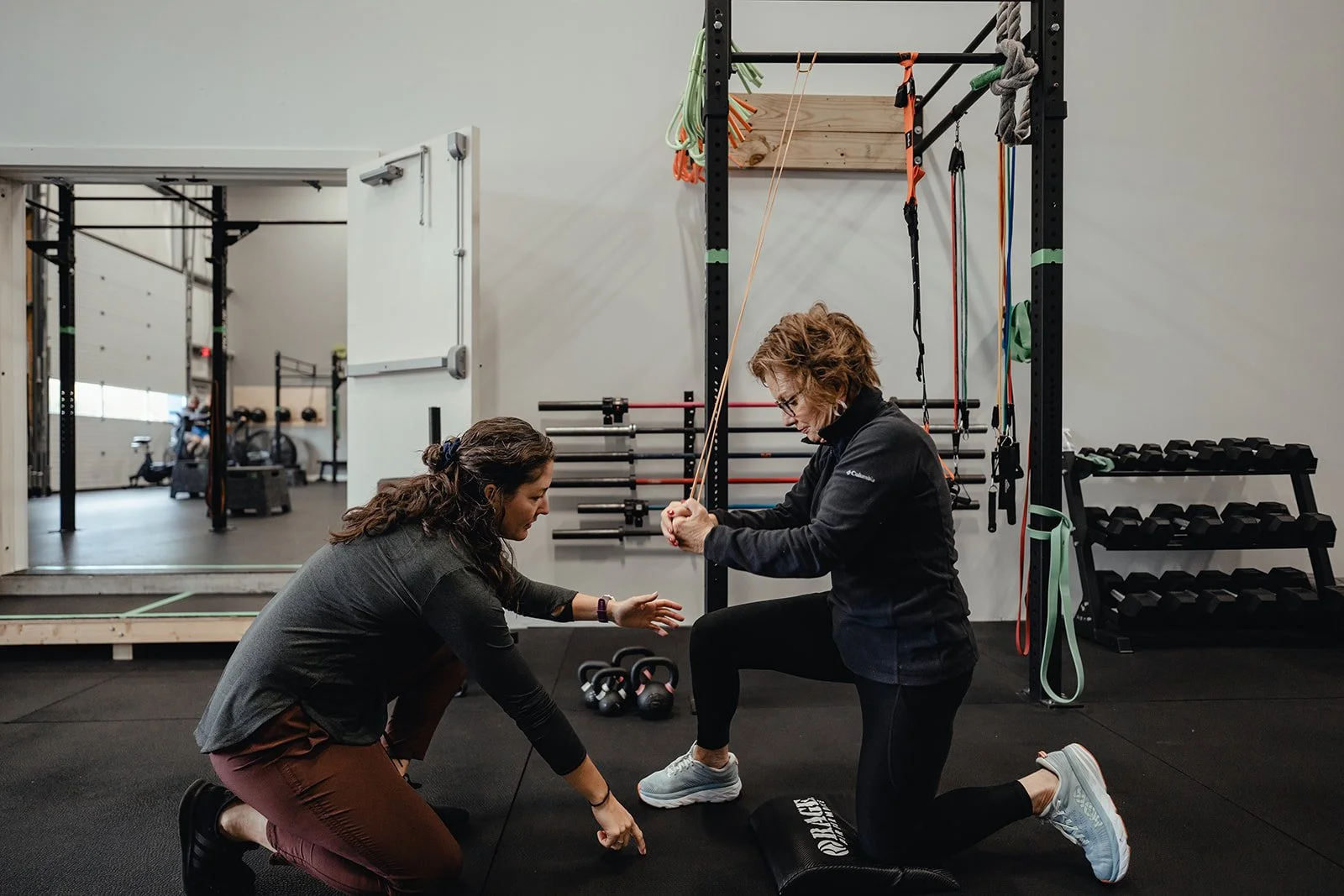
Your program is data. Your body is data too.
A well designed training program provides you a map. It provides you with direction. Your previous workouts also give you useful information about what you've done and what you might be ready for next. But neither can tell you exactly what your body is bringing into the gym on a given day.
Other variables, such as sleep, recovery, stress, training volume, soreness, nutrition, other activity, and your life outside of the gym can all affect how a workout feels.
Maybe you lifted 100 pounds last week and today 90 feels heavy. That doesn't erase last week's workout or mean you've suddenly lost progress. It tells you something about today.
The more consistently you train the better you can get at recognizing your own baseline and noticing when something feels different. Knowing your body and how it feels at baseline on a given day and across the week is very helpful data. It helps you make informed decisions about what is best for you and your workouts. Because ultimately, the program is the map AND you are the one that knows how to read the map to use it best.
More weight is only one way to progress.
Adding weight to an exercise is one form of progressive overload, but it isn't the only one.
Progress might also look like:
Performing more reps at the same weight
Moving through a greater range of motion
Improving your control or technique
Completing the same work with less rest
Feeling more confident with a movement
Recovering better between sets or workouts
Performing a movement with less pain or discomfort
Sometimes the number on the dumbbell stays the same while the way you perform the movement or feel about the movement changes significantly. Both of these count too.
Let’s zoom out.
One workout is one data point.
If you judge your progress entirely by whether you lifted more today than you did last time, you're looking at a very small piece of the picture.
Instead, zoom out.
What can you do now that you couldn't do three months ago?
How does a familiar weight feel compared to when you first picked it up?
How does that exercise feel different to you than it did when you first started?
Are you able to control the weight better?
How does your capacity during workouts generally feel?
Do you have more confidence with the movement pattern?
These questions and trends will tell you much more about your progress than the difference between Tuesday's workout and last Thursday's.

Train for the long game.
There will be days to push. There will be days to maintain. There will be days when backing off is the wise choice. Learning to tell the difference is part of training.
Your program matters. Your goals matter. Your previous workouts matter. And the body standing in the gym today also matters.
When you're training for the long game, progress isn't about forcing every workout to beat the one before. It's about building strength, capacity, confidence, and a better understanding of your body over time.
A final friendly reminder:
Using less weight today doesn't take away from the strength you've already built. Sometimes adjusting the plan is the plan.
Join us in Ridgeline Performance where we use Rate of Perceived Exertion (RPE) to help guide your weight choices to ensure you’re always on the right path forward.